What 200,000 of you have taught me about YouTube
Some practical lessons from our first year of going all in on YouTube, and a favour to ask
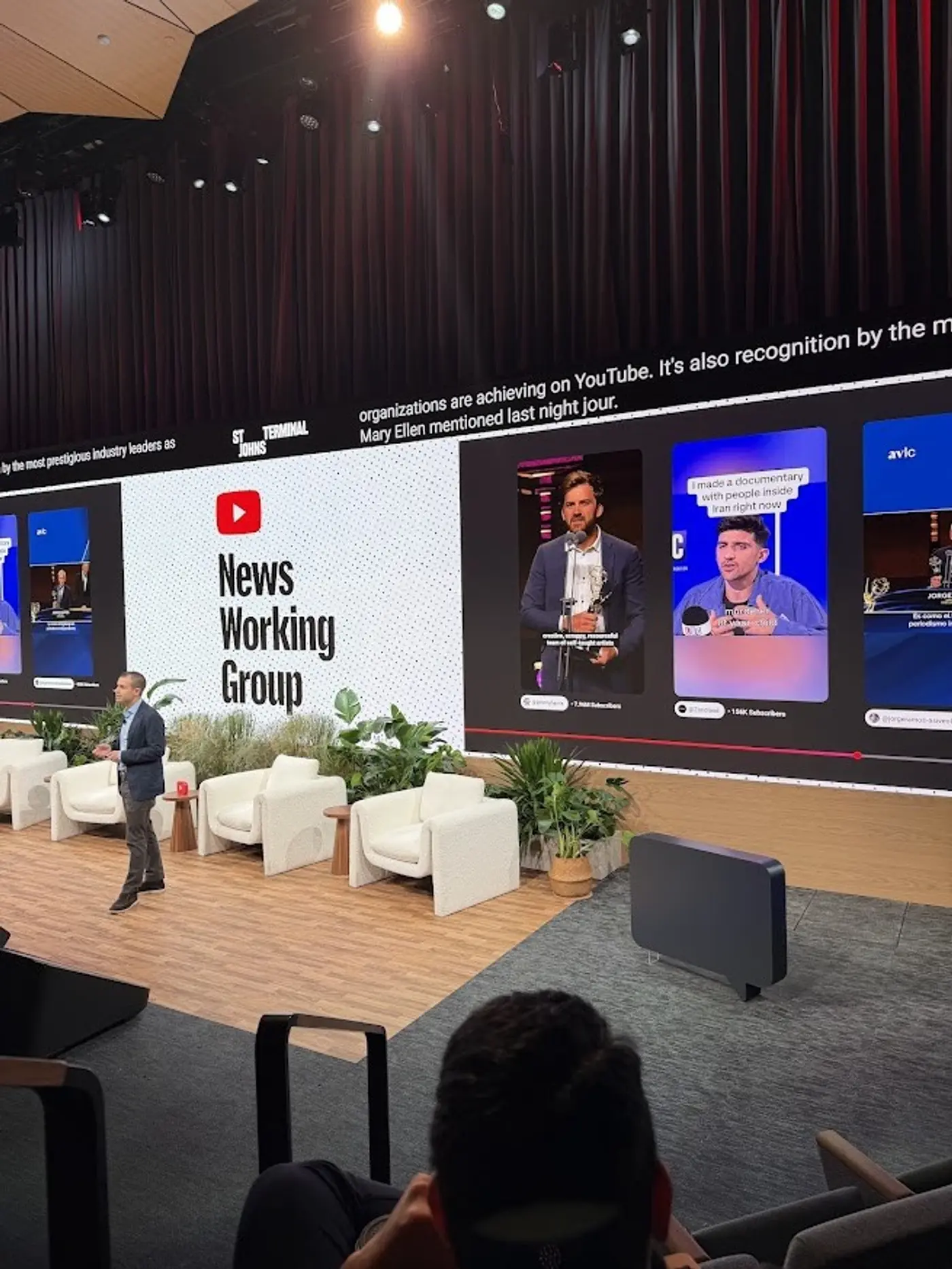
We've now hit 200,000 subscribers on YouTube. Almost half of you have joined in the last three months. Back in mid-August we were at around 100,000, so the channel has nearly doubled since the summer. Three of our last six films are the biggest we've ever made, and the channel is now getting around 6 million views a month. Our latest documentary, about me meeting British drug gangs, was on track to be our best ever performer until it was briefly age-restricted. That has since been lifted, praise the YouTube gods.
The team and I are pretty proud of all this, so it feels like a good moment to stop and write down what we've learnt since we started putting our films straight onto YouTube. I've been making documentaries for a long time, but making them for this platform is a different game, and a lot of you are clearly as fascinated by how it works as by the films themselves. So here's the honest version.
First of all, it's pretty hard work
We're making a lot of long, highly produced documentaries for the platform, and it's pretty exhausting. At the moment we're making two a month. That's mainly so we can flex our creative muscles quickly and see what we, and you, enjoy the most. It's easy as someone who's creative to get stuck in a creative inertia, a writer's block so to speak, where you talk a lot and deliver little. I wanted Zandland to be the opposite, a place where we just did things instead of talking about them. But it's a lot of highly bruising work, because the truth is that some stuff comes off and some doesn't. And when it doesn't, that is painful. More on that later.
People like good things, who knew?
When I decided we'd go all in on making what we want and putting it straight in front of our audience on YouTube, I was worried. Was there some secret I'd never unlock, some trick the big YouTubers knew that I didn't? The beauty is that there isn't really one. People like quality and consistency, which might be the secret to most things in life. The downside is that quality and consistency are the hardest things to achieve!
For us, length often means depth, and depth is what works. The biggest films we've made this year are all over half an hour long. They're the ones where we've properly dived deep into something, spending a week inside a tradwife's world or with a cartel kingpin rather than dropping in for an afternoon. People will happily sit with something for a long time if it keeps earning their attention. But it raises two big questions. What can you do that is genuinely quality, actually additive to the world and unique against the slew of content that already exists? And how can you get to a place where you can do it consistently? Because the consistency is actually the key... you have to stay in the game long enough to win. But it's also what hurts. This is all a lot of work. I'm filming more than I ever have, and the team are editing... A LOT.
What are you uniquely good at?
All of this leads to a couple of questions I keep coming back to, and they apply far beyond YouTube. What are you uniquely good at? What's your moat? And how do you get it to a place where you can make that thing again and again?
For me, the key was focusing on a combination of what I'm good at, what my team is good at and what we actually enjoy doing. To put simply, that was getting access to fascinating people, and interviewing them in a curious, understanding and challenging way. The goal was to step into other people's shoes. But figuring out what we were uniquely good at only came with experience and time... I'd worked in TV and news for about a decade before this, and I made a lot of mistakes there too, which helped. It's not easy, but it's possible, and it's all about learning and taking the rough with the smooth.
The obvious stuff, and the less obvious stuff
There's some obvious stuff you just have to do, like A/B testing thumbnails and reading your comments properly. But at the end of the day none of that saves a film that isn't good. You need great content first, and then you need to make sure people actually find it. I used to think the packaging side of things was a bit beneath the journalism. Now I see it as part of the journalism, because what's the point of a story nobody watches?
One of the trickier lessons is that simplicity is key. You have to be able to sell a film in one simple title and thumbnail, and what we've seen is that stories that are harder to explain don't always do as well. That's hard for me, because a lot of the most important things I want to cover are nuanced and complex and can't be boiled down to one line. It's something we're still figuring out. We try to do it by getting to the nub of an issue and finding the human story inside it, but it's also where I'd ask for your help. When we put out one of the more complicated stories, please show up for it. Those are often the films I care about most, and they live or die on whether you give them a chance.
But to reiterate, the cold hard truth is that in the niche we're operating in, our best moat is quality, unique access and premium content... and that's quite a high bar to hit time and time again.
There are failures, and you feel them hard
I've never been great at things underperforming in life. Perhaps I think failure is something I'd rather avoid? YouTube adds a whole new level, though, because everything is so visible. Every view count is public, so you really, really don't want to fail. Some of our first videos weren't right, and I specifically remember one that barely mustered over 1,000 views. I had an interview a few days later, and the interviewer, who was doing a story about our work, pointed out that the content wasn't exactly performing well. I felt very exposed. We had made a video that just wasn't quite right... the horror! But the truth is, you have to fail, a lot, all the time, with no filter, in front of everyone, and just get up, and go again.
Another video, about violence towards women in Papua New Guinea, performed horrifically when we first released it on the channel, getting only about 800 views in its first week. It's now on 1.5 million. So another lesson is that if you listen to the algorithm too much and take it too personally, you will end up running around in circles.
Even now, not everything lands the way we hope. Our witchcraft film, which I loved making and which is one of the most personal things we've done, hasn't travelled anywhere near as far as our last five releases. That stings a bit. It's also useful, because it tells us something about what you come to us for, and we'd rather learn that than pretend it isn't true.
It's not just me
It's worth saying that Zandland is a lot more than me. Every film has a whole team behind it, finding the stories, getting the access, shooting and editing, and arguing with me about titles. None of this works without them. And another big lesson I've learnt is that you just have to give things a try, learn from them, move on and develop a new gut instinct. Eventually you do just start to get it, and so does the team, but in a way that you can't quite explain.
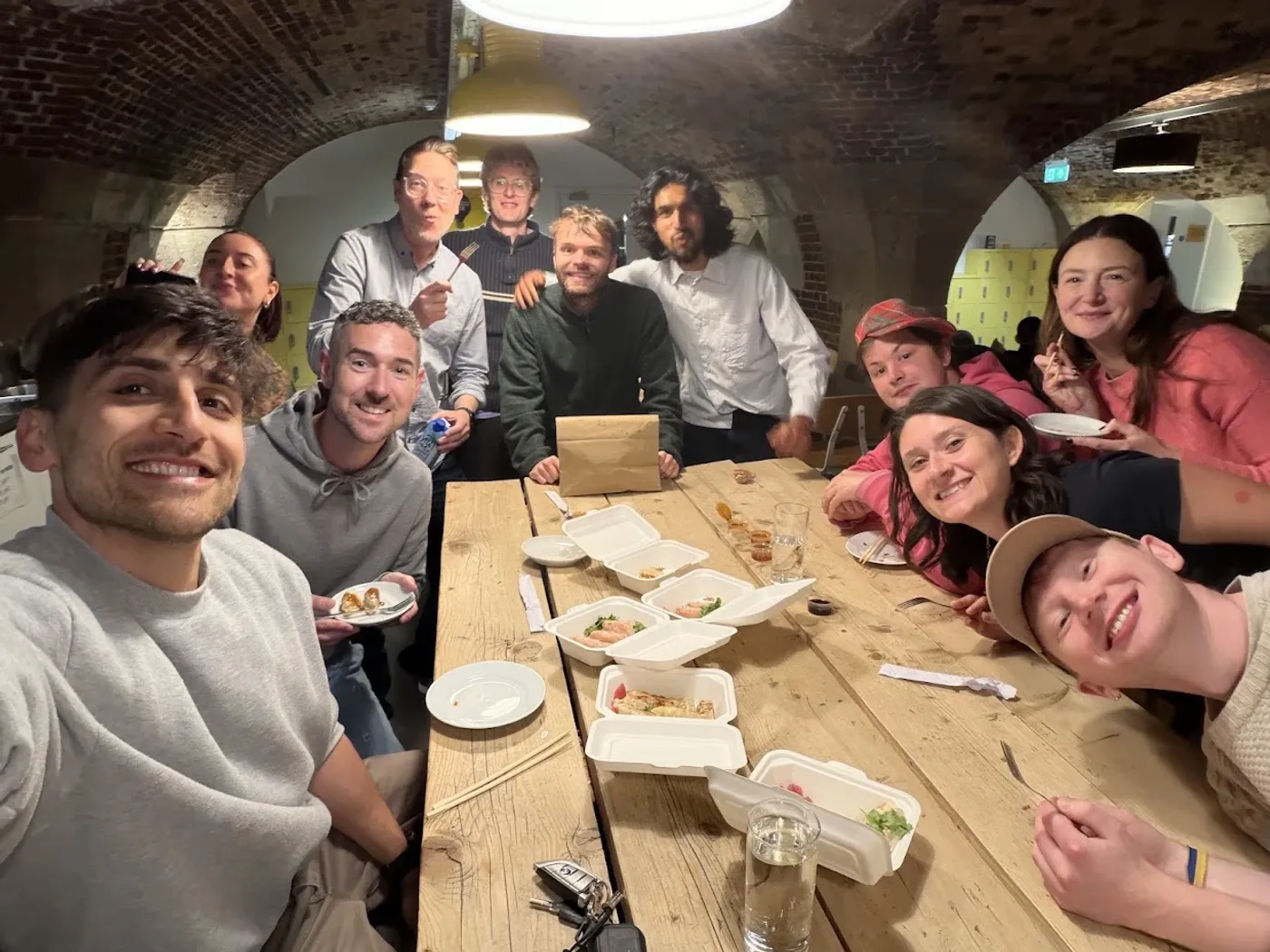
Also, a side point, but over time you'll start to see some new faces on the channel. I won't give too much away, but they'll be people who can get into worlds I never could, and who see things in a completely different way to me. I'm excited about it, and I hope you will be too.
Which brings me to the favour
One of the cool things about this work is that as the community grows, more and more of you are watching, which means more people stop me on the street to talk about the films. And it turns out Zandlanders are pretty clear on what they enjoy and what they don't. That's great, because it helps us a lot with honing what we do.
So I'd love to hear more of it. Which films have stayed with you, which ones did you just not like, and what would you like us to do more of? Also, what do you think of the range of films and topics? Some are super in-depth, and some are more like vignettes into different worlds, like our AI boyfriend film. Do you like those, or do you come to us for the deep dives? Reply to this or discuss in the comments, because a lot of what we make next will come from what you say.
Thank you for being here, whether you joined last week or were one of the thousand people who watched that first video. We're only just getting started.
Ben Z
Comments
Nothing yet. Say what you think.
Sign in to comment. It takes a minute: just your email, no password.